Glossary of Stoneware Terms
Kiln Burn A darkened area on a piece of stoneware that occured during the firing process when the piece of stoneware was located too close to the fire source.
Salt Drip The greenish drip marks that are sometimes found on stoneware if too much salt collected at the top of the kiln and subsequently dripped onto the pieces during firing.
Stack Mark Because of the expense associated with firing stoneware, the potters would pack the kilns with as much stoneware as possible, stacking pieces side by side and on top of each other, separating each piece with clay spacers. The spacers prevented the salt from reaching the stoneware during the firing process, and resulted in unglazed areas on the stoneware.
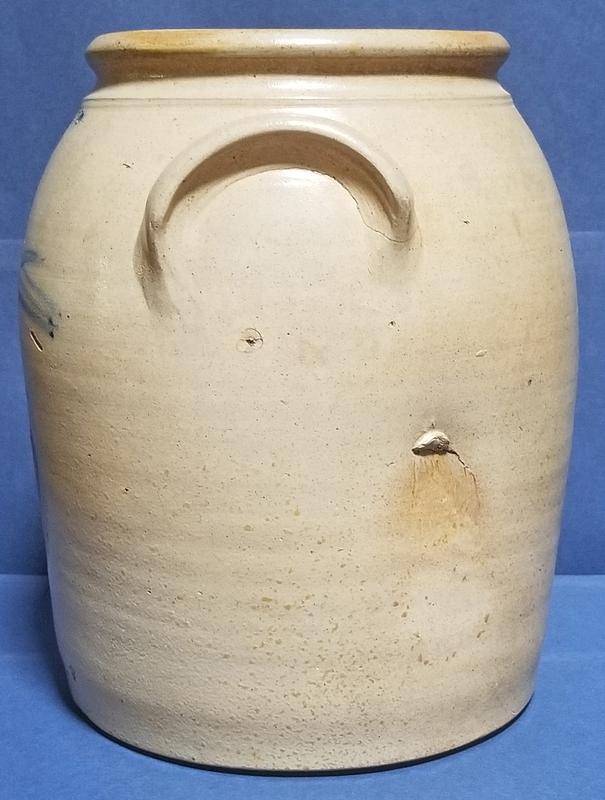
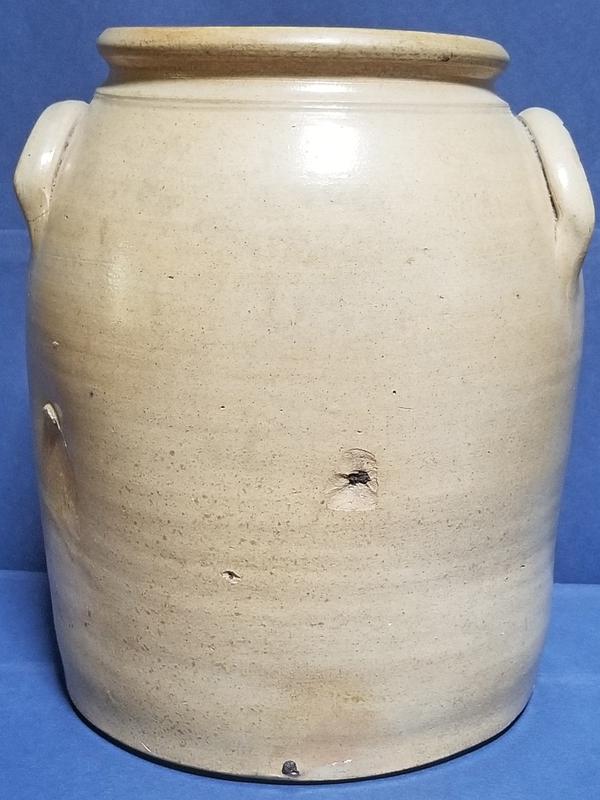
Stone Ping The common term for the blemish that appeared on the surface of the stoneware when the clay wasn't thoroughly cleaned before using, leaving behind small stones that exploded during the firing.
Water Glass A preservative used for storing fresh eggs that interacted with the eggshell and caused a chemical reaction that bonded with the glaze, creating white stains on the surface of the stoneware.
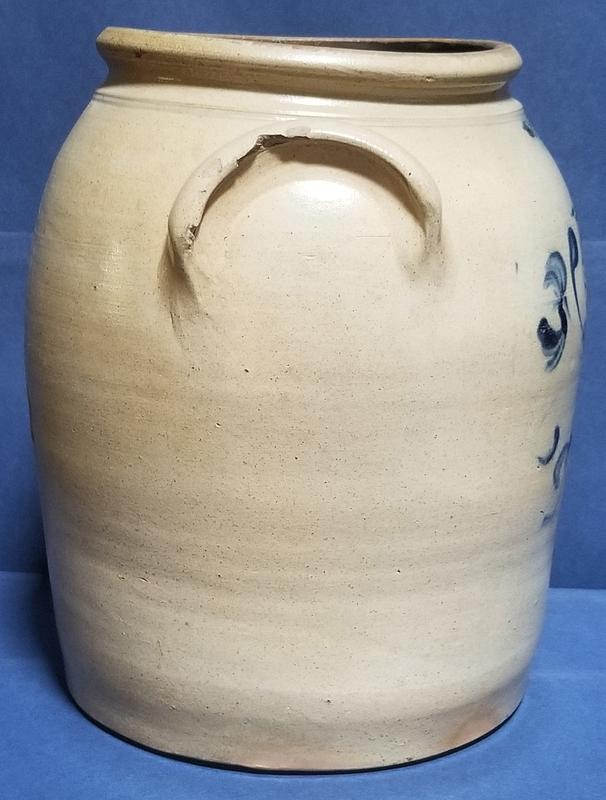
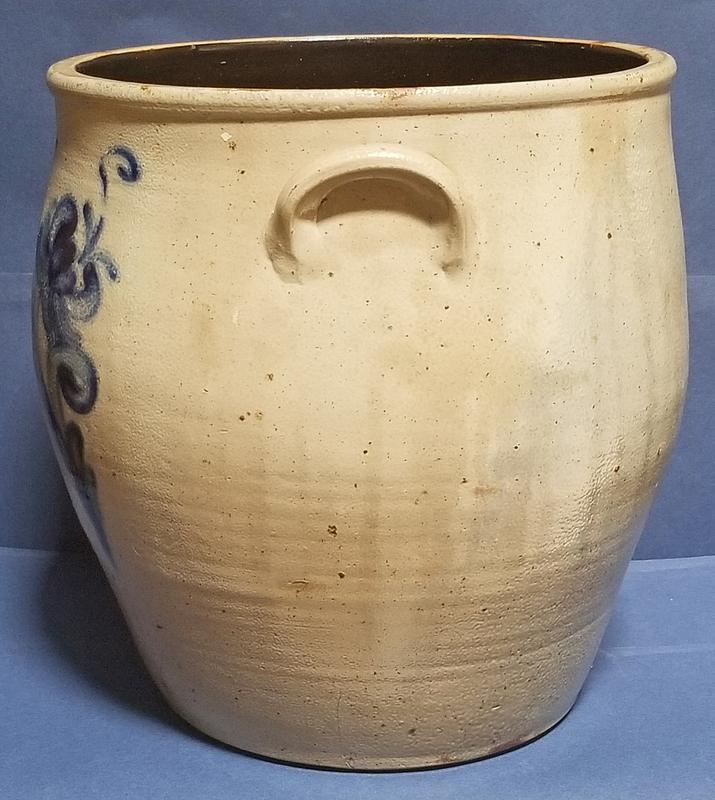
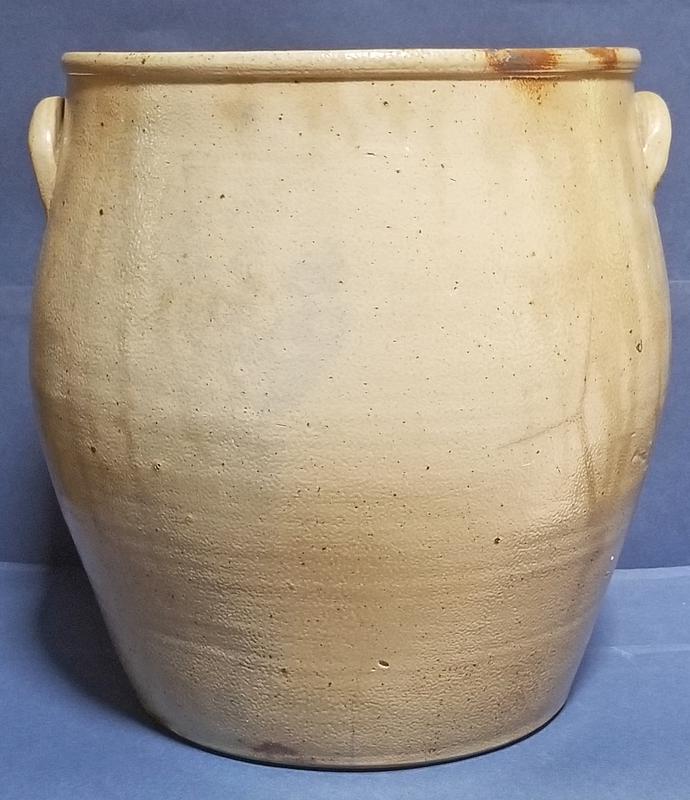
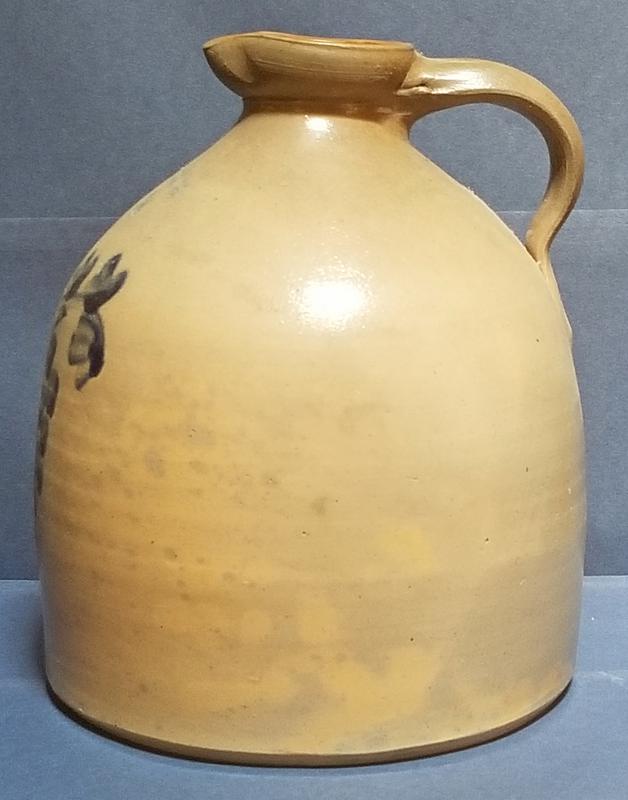
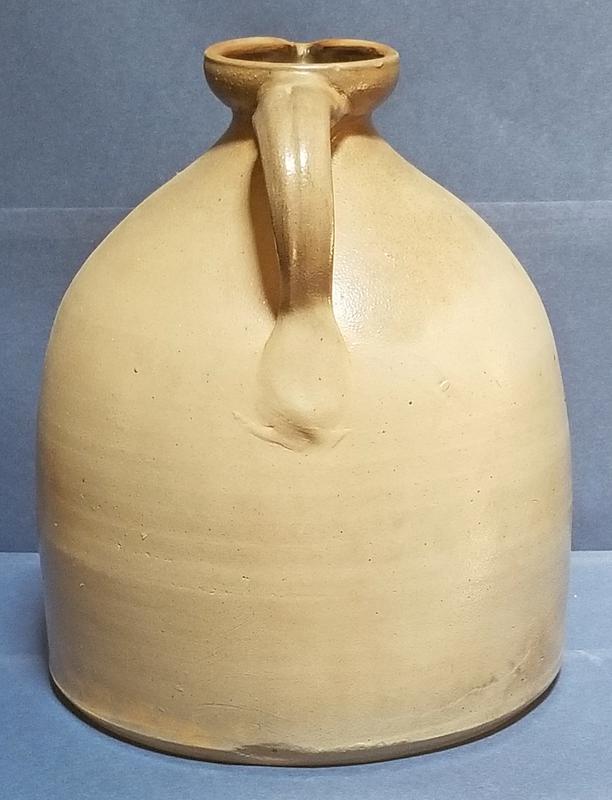
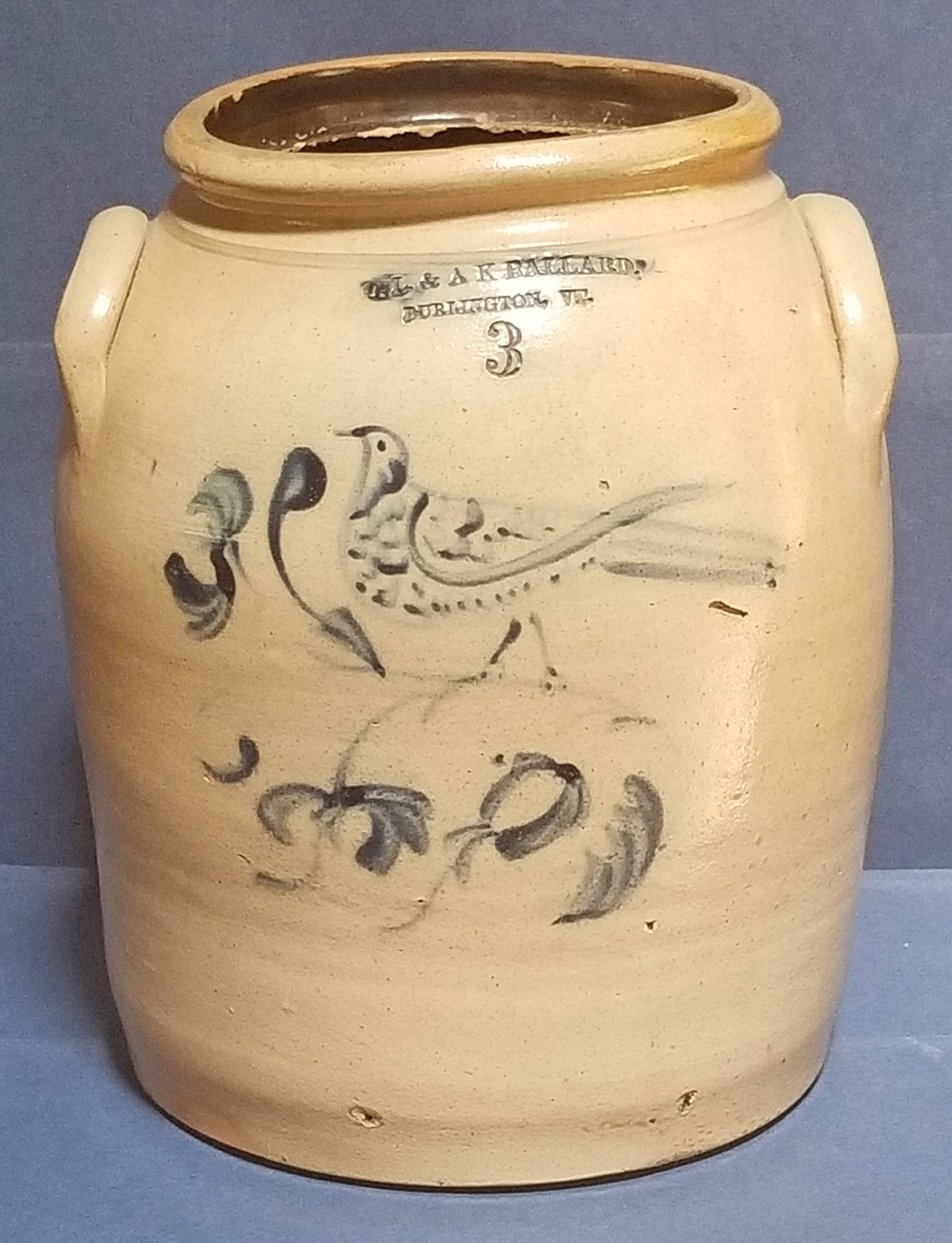
A three gallon jar marked OL & AK Ballard, Burlington, VT with a bird and floral decoration. There are chips on one handle as well as minor stone pings and other firing imperfections. It dates to the late 1850s.
MRA-07051 $1,275
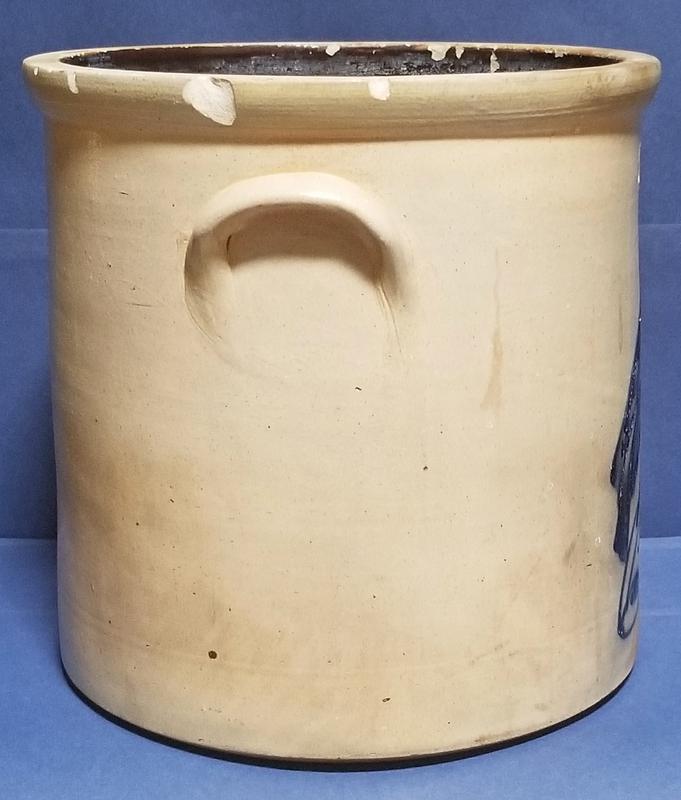
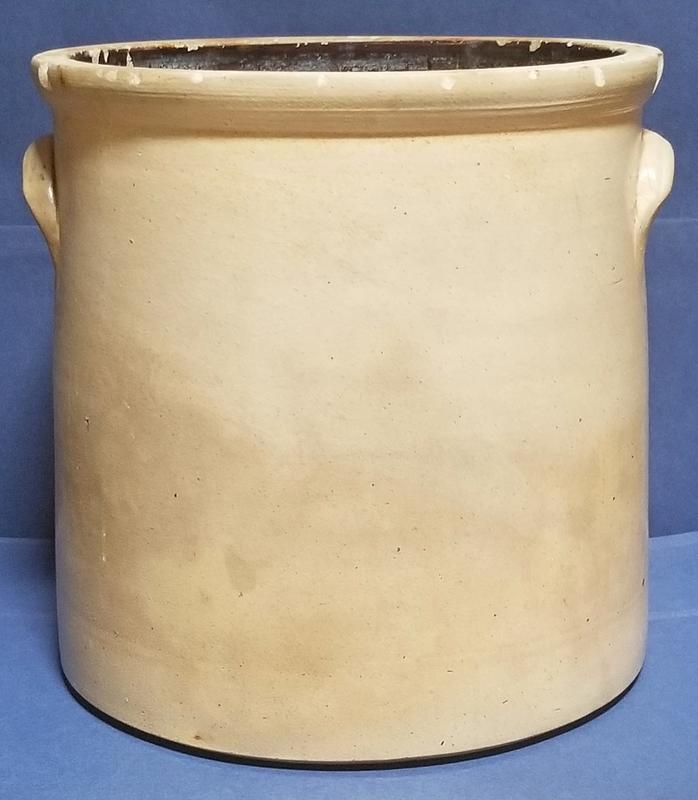
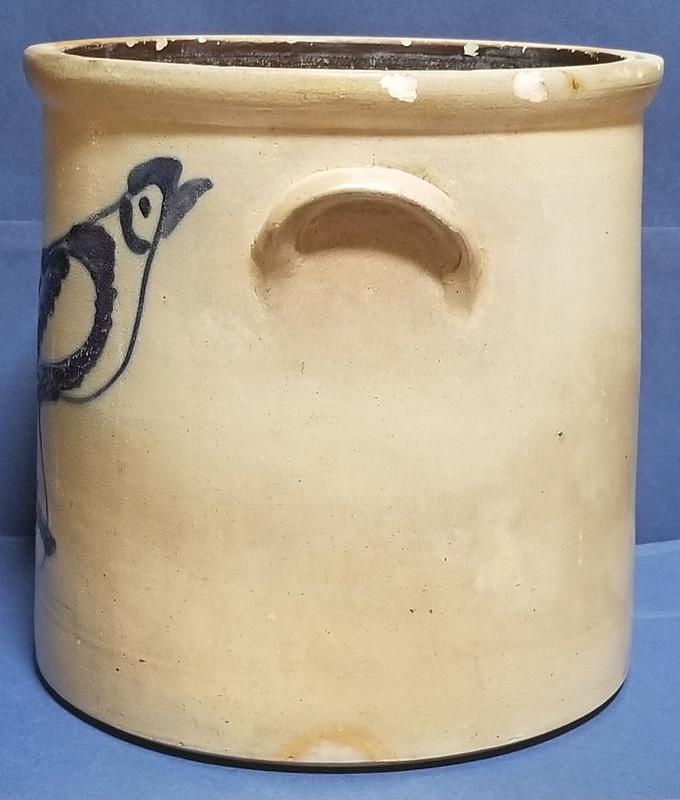
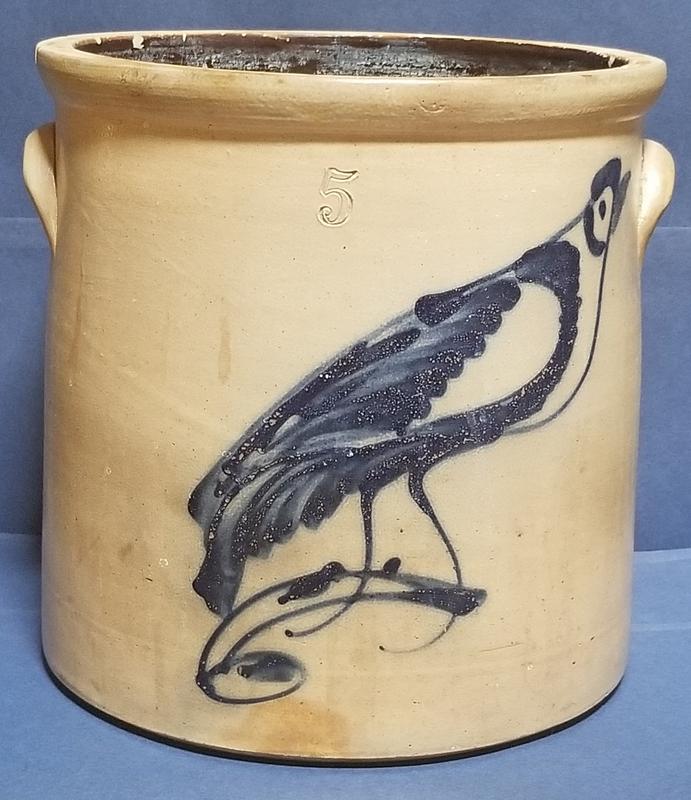
A mid 19th century five gallon crock with a large bird decoration typical of potteries in New York State. It has rim chips, a minor hairline at the back rim and water glass stains on the interior. Ex-Lew Scranton.
MRA-07052 $700
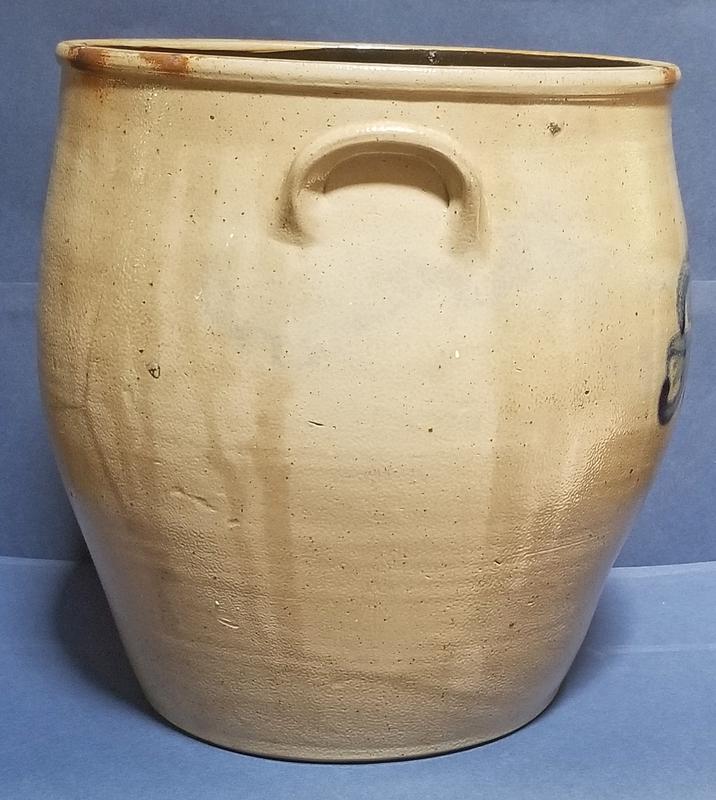
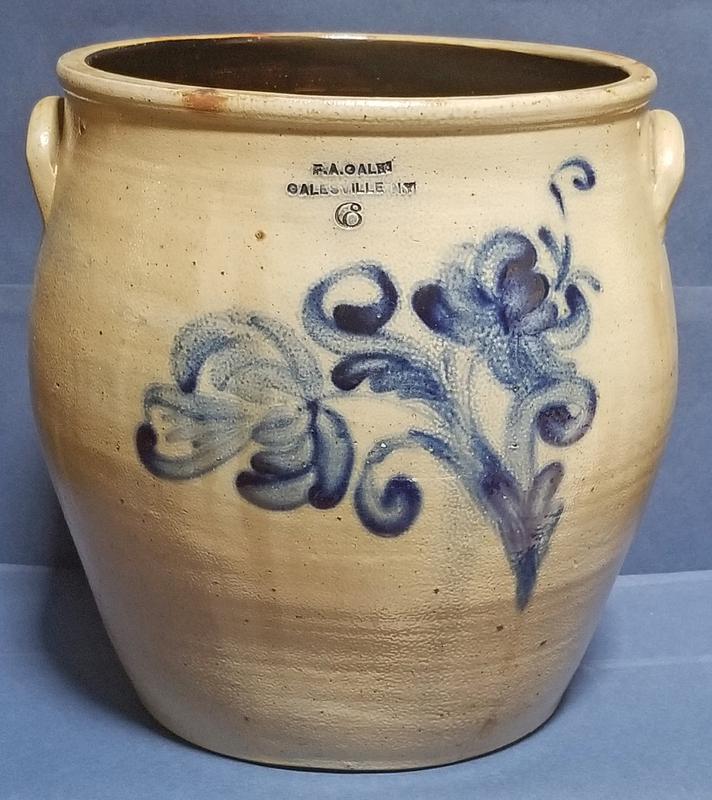
A six gallon ovoid jar with a large floral decoration. It was made at the pottery of Frederick A. Gale in Galesville, New York between 1859 and 1865. There are hairlines on the back and at the bottom.
MRA-07053 $1,125